Most travel nursing housing advice is written around a single 13-week contract: pack light, take the agency stipend, land somewhere for three months, repeat. That logic breaks down the moment you extend, take a second contract at the same facility, or know going in that you're committing to six months or longer in one metro area. At that point, a hotel room or a short-term corporate suite stops being convenient and starts being expensive — and a furnished 6-month rental starts making a lot more sense.
Work out your actual timeline first
Before you look at a single listing, add up your committed weeks. A single 13-week contract is short of six months on its own, but it's extremely common for travel nurses to:
- Extend an existing contract once or twice at the same facility
- Book back-to-back contracts in the same metro area through the same agency
- Take a permanent or long-term local role after a travel assignment, with no fixed end date
If any of those apply, you're closer to a 6-month tenant than a 13-week one, even if your paperwork is technically split into shorter blocks. It's worth saying that plainly when you request a quote from a landlord — most owners renting on a 6-month basis care more about your realistic total time in the area than about how your contracts are paperworked.
Why the math flips after about 10-12 weeks
Extended-stay hotels and corporate suites price by the night, with a "long-stay" discount that kicks in around 30 days. That discount is real, but it plateaus — the nightly rate rarely keeps dropping the longer you stay past a month. A furnished 6-month lease, by contrast, is priced for the full term from the start, which is usually where the per-night cost ends up meaningfully lower than even a discounted hotel rate, on top of getting a real kitchen, a separate bedroom, and space to actually unpack.
If you already know you're staying more than three months, price out the 6-month furnished option before you renew a hotel booking — the gap is usually bigger than people expect.
What to check before you book
A handful of questions save most of the headaches later:
- Is it actually furnished, or "furnished-adjacent"? Ask specifically about kitchenware, linens, and whether the wifi is already active — not just "furniture."
- What's the commute to your facility? Get real drive times at shift-change hours, not just a distance in miles.
- Can you sleep during the day? If you're rotating or working nights, ask directly about how quiet the building is — a busy retail corridor or a building full of short-term tourist rentals will cost you sleep.
- What happens if your contract changes? Ask how flexible the owner is on extending or adjusting dates before you sign, since contract end dates shift constantly in this field.
Splitting a place with another traveler
A 2-bedroom, 2-bathroom furnished unit works well if you're coordinating with another nurse on the same contract or agency — you each get a private room and bathroom, and the per-person cost of a furnished apartment often comes in well under two separate hotel rooms for the same six months.
Looking at Fort Lauderdale for your next assignment?
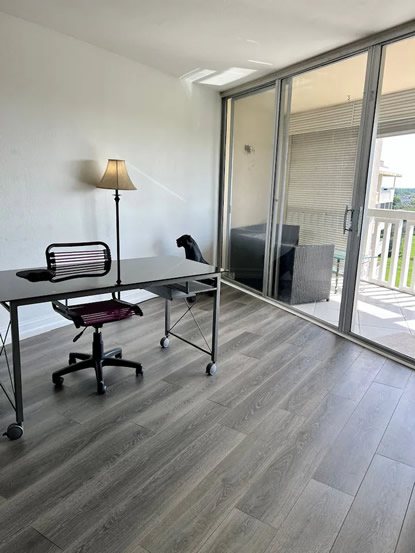
The unit featured on this site is a furnished 2-bed, 2-bath penthouse on Inverrary Golf Course in Lauderhill — a quiet residential setting within reach of the area's hospitals, with fast wifi for charting and a lease built around 6-month stays.
Request a quote